Striking a chord: the power of music in advertising

Sophie Stanley
April 10, 2024
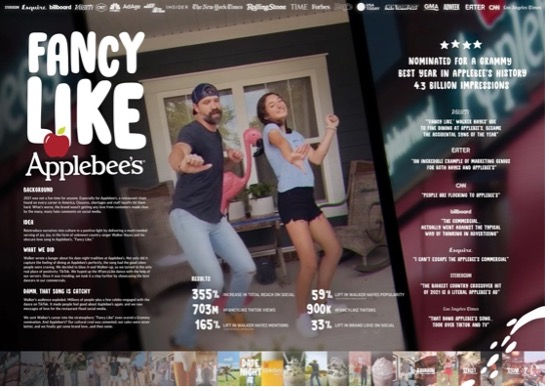
In 2019, the restaurant chain Applebee’s faced a decline in sales and were forced to consider a campaign that would capture an entirely new audience – and even more so with a heightened sales drop in 2020. With the release of Walker Hayes’s “Fancy Like” in 2022, Applebee’s sales shot higher than their pre-pandemic levels. Along with country music fans, the song reached millions of users on TikTok. Considering the 102% boost in sales as compared to the year before the song, it’s safe to say that “Fancy Like” positively altered perceptions of the brand and introduced its services to an entirely new group of customers.
Musical advertising can be pitch perfect.
Applebee’s success, even though accomplished without their corporate involvement, demonstrates the incredible power of musical advertising. In the world of advertising, every impression and methodical tactic matters. By creating a memorable brand persona, Applebee’s found themselves susceptible to positive endorsements outside of their power. Branding determines the public’s perception by establishing a unique connection with the audience; when the audience feels a connection with a brand, they are more inclined to support it – in Walker Hayes’s case, by writing a song.
The strategic use of music and videos have emerged as essential tools in capturing the audience’s attention, evoking emotion, and etching brand identities into the consumer’s mind. From iconic jingles to carefully calculated soundtracks, music has become an indispensable element in the art of persuasion.
Musical advertising creates a more memorable campaign for consumers. Various styles of songs and instruments purposefully evoke different reactions that fuel brand interactions. By incorporating music into an advertisement, companies can control an audience’s perception and their attraction to a brand. “Fancy Like” introduced the younger users of TikTok to the restaurant and its services. It once again became a staple for family meals.
Finding the perfect key
How can companies manipulate their advertising through music? The instrumentation, style, and song key play a major role in creating a strong emotional reaction. A consumer study explains what substantially effects these reactions.
· The acoustic guitar in a major key creates a caring, calm, and sophisticated sound.
· Short, sharp notes in a major key evoke happiness and excitement.
· Repetitive drums encourage energy and motivation.
· A shift to a minor key evokes sadness or melancholy.
· Brass instruments underlines anger and reflection.
In a study conducted by Nielsen, they studied the effectiveness of music in TV advertisements. In 600 commercials, more than 500 contained music. The research displayed those commercials including music performed better with audiences across four key metrics: creativity, empathy, emotive power, and information power.

Carefully constructing advertisements to these measures ensures that audiences perceive the brand in a calculated way. Pairing musical elements with corresponding visuals enhances brand retentionand defines how they present themselves.
How are other musical tones used?
Pharmaceutical companies have also mastered the use of music in their advertisements. They play catchy, upbeat melodies to mask the long list of side effects their prescription causes. The song aligns with colorful visuals typically with active characters similar in age to their target audience.
Recently, there has been an influx in pharmaceutical commercials taking a classic song and rewriting the lyrics with the name of their medicine. The prescription Trelegy reworded “ABC” by The Jackson Five to “Tre-le-gy… power of 1-2-3.” Those who graduated high school when this song was popular are now in the target age for this medicine. Incorporating a familiar song tied to a generation catches their attention and recommends a product they might need.
ASPCA broadcasts commercials to stop animal cruelty - perhaps the most noticeable musical advertisement. Playing “In the Arms of Emotion” by Sarah McLachlan alongside melancholy images of neglected animals evokes extreme sadness. The song is now associated with ASPCA and their philanthropic efforts. This messaging effects anyone with animals or who feels sympathy for their conditions.
By implementing a positive tune, brands utilize jingles as a catchy and succinct melody paired with memorable lyrics to create a unique signature. Jingles have the remarkable ability to cut through the noise of everyday life and embed themselves deep within the subconscious of consumers. Their simplicity makes them easily recallable and prevalent long after their exposure in an advertisement.
If you asked someone to finish “the best part of waking up” by Folgers or “they’re magically delicious” by Lucky Charms, they likely wouldn’t hesitate. In an increasingly crowded marketplace where attention spans are short, jingles provide a memorable and effective way for brands to differentiate themselves with unique music that connects with a consumer.
The Final Note
Musical advertising is exceptionally powerful for connecting audiences to a brand. Music remains one of the most powerful methods of communication, and advertisers harnessing this power ensures influential campaigning destined to touch the audience. Fostering excitement, happiness, sadness, or reflection through an ad will continue to play a massive role in the advertising industry.


Comments